White House Correspondents Insider

Behind the scenes of the most powerful city in the world — Washington, D.C. — and those who cover it.

  • Home
  • About
  • White House Correspondents’ Garden Brunch
  • Washington Insider
  • Archives
  • Contact

Army CTO Alex Miller Challenges Industry: Bring Your Best Tech to the Army; Warns of Drone Threats, Praises ChatGPT-5 Energy Efficiency in Washington AI Network Podcast 

August 22, 2025 By WHC Insider

In an exclusive interview with the Washington AI Network, U.S. Army Chief Technology Officer Dr. Alex Miller pushed for AI companies to offer their best technology to the military, describes the dominance of drones calling them “airborne IEDs” and stressed the importance of working with commercial AI providers in the debut episode of the Washington AI Network Podcast’s new CTO Sessions series.

The veteran technologist and intelligence officer gave his insights on warfighting today, “What you’re seeing in Europe with the drones — those are airborne IEDs,” Miller said. “It is a bomb that can fly a hundred miles an hour. We have to get really good at countering those — using AI to detect them in the electromagnetic spectrum, identify them instantly, and deploy countermeasures in real time.”

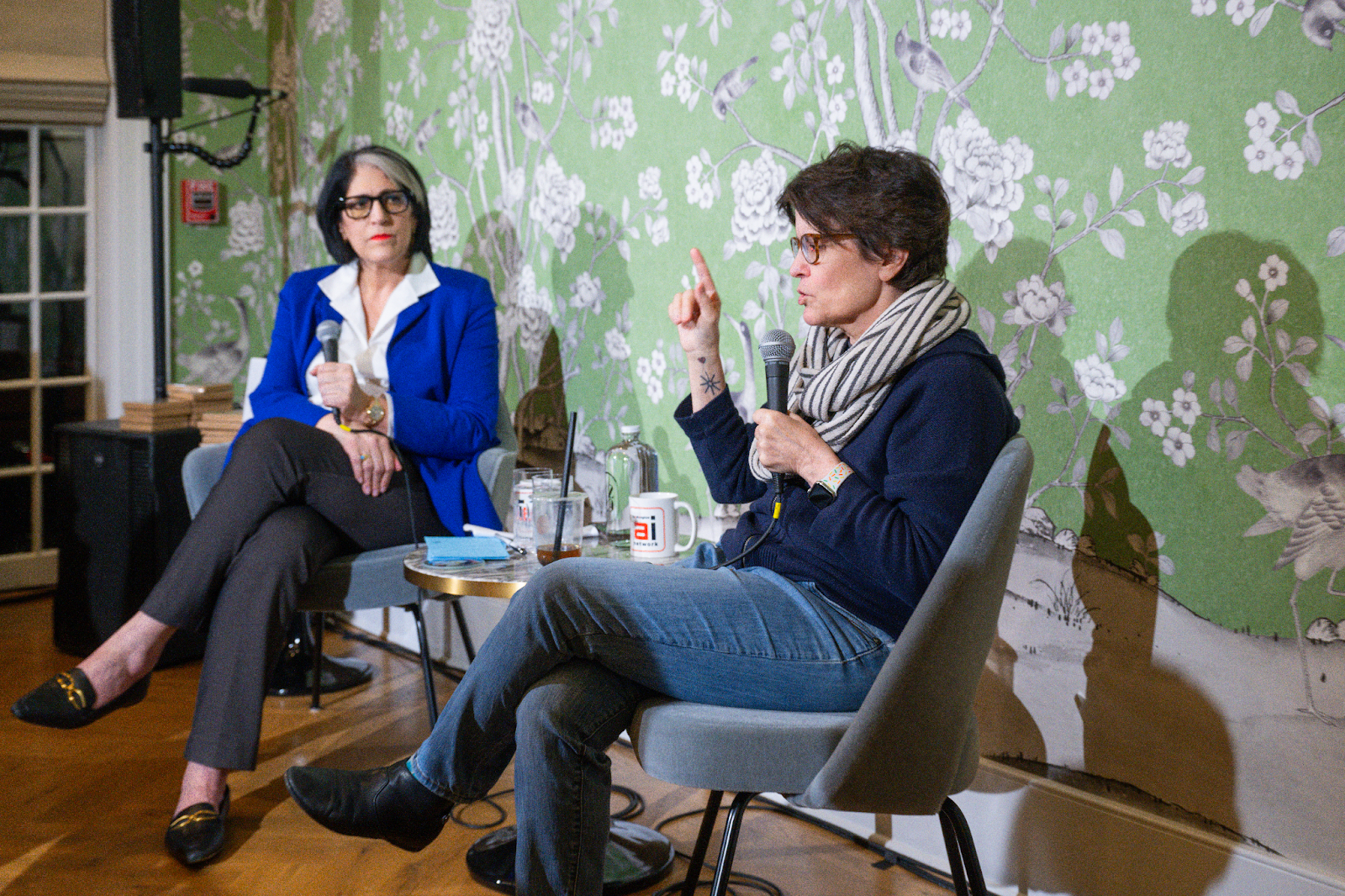
The conversation, hosted by Washington AI Network founder Tammy Haddad, covered the Army’s plans for adopting artificial intelligence, speeding procurement, the China threat and preparing soldiers for the future fight.

Miller said the Army will adopt frontier AI models rather than try to build its own.
“I don’t like to compete with industry. That’s bad for taxpayers and not good value for soldiers,” he said. “In areas where industry’s way ahead, I don’t need to compete with the frontier AI providers. We’ll adopt those and tailor them to whatever our mission is.”

On the newly released GPT-5 model, Miller pointed to gains in efficiency over raw intelligence.
“Was there a huge increase in intelligence? Not that I’ve seen online,” he said. “What we see with 5 is another massive consolidation and power efficiency. Eventually, I want to run those LLMs on soldiers’ faces with smart glasses, on their phones, and on their vehicles.”

Miller also highlighted efforts to shorten Army procurement cycles.
“Our next generation command and control document is three pages — three and a half if you count the graphic,” he said. “Then we spend a year just getting technology into our soldiers’ hands to try it and get direct feedback… What we’re trying to do now is fix the process so that’s no longer a workaround — it’s just the way the process works.”

Miller underscored the Army’s central role in U.S. defense.
“When the world dials 911, the phone rings at Fort Bragg,” he said. “We are everywhere, all the time, every day, doing every mission the nation asks us to.”

The episode was recorded on August 12 at The House at 1229 in Washington, DC, and presented in partnership with the NobleReach Foundation, where CEO Arun Gupta introduced the 2025 cohort of NobleReach scholars.

The full conversation with Dr. Miller is available now on YouTube and across podcast platforms, including Apple Podcasts and Spotify.

SandboxAQ CEO Jack Hidary and Chad Sweet, co-founder and CEO of The Chertoff Group, attend the inaugural Washington AI Network CTO Session featuring U.S. Army CTO Dr. Alex Miller on August 12, 2025.
NobleReach Foundation CEO Arun Gupta (far left) and Tammy Haddad (far right) welcomed the 2025 cohort of NobleReach Scholars at the inaugural Washington AI Network CTO Session featuring U.S. Army CTO Dr. Alex Miller on August 12, 2025.
General Catalyst’s David Greenberg, Booz Allen Hamilton’s Joanna Guy and NobleReach scholar Virginia Partridge at the inaugural Washington AI Network CTO Session featuring U.S. Army CTO Dr. Alex Miller on August 12, 2025.

Filed Under: Washington AI Network

Washington AI Network and General Catalyst Institute Convene Leaders Shaping the Future of National Security

July 11, 2025 By haddadmedia

Jonathan Clifford, Carey Browning, Mark Huntington, Cameron McCord, Teresa Carlson, Maryam Mujica, Jon Battles, Evan Beard, Tammy Haddad, and Kaly McKenna at Washington AI Network and General Catalyst Institute’s “Cocktails & Conversation” event on the future of national security on July 9, 2025.

The Washington AI Network and the General Catalyst Institute convened top voices in defense innovation, AI, and industrial reinvention on Wednesday evening, July 9, at The House at 1229 for a conversation exploring the future of national security through private sector leadership.

The evening featured a live podcast taping and panel discussion, led by Tammy Haddad, founder of the Washington AI Network and host of its podcast.

GCI president Teresa Carlson and Dr. Jason Rathje, former director of the Office of Strategic Capital at the U.S. Department of Defense

Teresa Carlson, founding president of the General Catalyst Institute, highlighted the unique opportunity and responsibility for private-sector founders to partner with government.

“You’re not just building companies—you’re building capacity,” Carlson said. “The role of the private sector is to help government scale and succeed. That’s what tonight is all about.”

Dr. Jason Rathje, former director of the Office of Strategic Capital at the U.S. Department of Defense, echoed that message:

“The nation is at an inflection point. We need to re-industrialize America. And it’s not just about the Defense Department anymore—it’s commerce, energy, state, industry, investors. You all are part of the solution set.”

The conversation then spotlighted three General Catalyst-backed founders working at the intersection of AI, automation, and industrial resilience:

  • Evan Beard, CEO of Standard Bots, whose U.S.-made AI-powered robotic arms are redefining industrial automation.
  • Cameron McCord, CEO of Nominal, which builds a software platform for testing and certifying complex hardware systems.
  • Jon Battles, vice president of technology strategy at Cobot and an Amazon veteran, who is applying autonomous robotics to logistics, healthcare, and defense.
Washington AI Network founder Tammy Haddad interviews Standard Bots CEO Evan Beard, Nominal CEO Cameron McCord, and Jon Battles, vice president of technology strategy at Cobot.

Beard explained how Standard Bots is making automation easier and more accessible for American manufacturers:

“If you quote parts in the U.S. versus China, it’s 10x more to make parts in the U.S.,” he said. “We need better training, and we need centers of excellence to show how to build best-in-class facilities.”
“What we heard this week is that this is a priority… It really feels like a moment of tremendous change.”

McCord described the need for software that can rapidly test and validate hardware:

“It is a solved problem in the world today to test and validate software. That same luxury does not exist if you are building hardware—and especially software-defined hardware.”
“Admiral Davidson talks about 2027. Time matters.”

Battles reflected on lessons from the pandemic and his time at Amazon:

“COVID taught us how critical the supply chains were. We had to fly in masks from China for our employees… and we just simply couldn’t make them in the U.S.”

“The government knows what needs to be done. They know the technologies that need to be developed. Now it’s about aligning these needs to a quick execution plan.”

The discussion also touched on systemic challenges—from procurement timelines to industrial workforce gaps—and the urgent need to scale innovation across agencies and across the country.

Mark Huntington, managing director, North America at PhysicsX, and Carey Browning, chief commercial officer at Re:Build Manufacturing

Mark Huntington, managing director, North America at PhysicsX, and Carey Browning, chief commercial officer at Re:Build Manufacturing, also spoke about modernizing industrial capabilities through software and advanced production.

Attendees included: U.S. Treasurer Brandon Beach; Artem Sherbinin, CTO of the U.S. Navy’s Task Force Hopper; John Sankovich of DIU; Colonel Chris Keller, U.S. Air Force; Jim Goyer, Alex Flemister, and Jordan Wood of the White House Office of Public Liaison; Jake Denton, CTO of the FTC; Economic Club of Washington CEO Mary Brady; Jeremy Bash, managing director and partner at Beacon Global Strategies; Andrew Wills of Invenergy; Ashley Callen of Jenner & Block; Jonathan Cousimano from Gov. Gavin Newson’s office; Tyler Lewis from Gov. Wes Moore’s office; Cornerstone’s Andy Flick; GCI’s Maryam Mujica, Jonathan Clifford, and Peter Nonis; Palantir’s Machalagh Carr, Palantir; Alan McQuinn of the House Research and Technology Subcommittee; EqualAI CEO Miriam Vogel; NTIA Associate Administrator Jaisha Wray; Trevor Smith from Rep. Vince Fong’s office; Seven Letter’s Sabrina Singh; Anita McBride, author and former chief of staff to first lady Laura Bush; Onebrief CEO; Grant Demaree; NIST’s Martin Stanley; Thomas Halvorsen of the Middle East Institute; Alex Yergin of Booz Allen Hamilton; and Alex Poulin of Lavrock Ventures.

Filed Under: Washington AI Network

Navigating Global AI Policy from Paris: UNESCO U.S. Ambassador Courtney O’Donnell and OECD U.S. Ambassador Sean Patrick Maloney on AI, Equity, and Global Collaboration

December 23, 2024 By WHC Insider

In the latest episode of the Washington AI Network Podcast, Courtney O’Donnell, U.S. Ambassador to UNESCO, and Sean Patrick Maloney, U.S. Ambassador to the Organization for Economic Cooperation and Development (OECD), joined host Tammy Haddad to discuss the pivotal role the United States is playing in leveraging AI to advance education, health, climate action, and international cooperation. The interview was recorded at the shared offices of the U.S. missions to the OECD and to UNESCO offices in Paris, France on December 5.

Through their unique roles at UNESCO and OECD, Ambassadors O’Donnell and Maloney are shaping global policies that prioritize ethical governance, inclusivity, and sustainability. During the conversation, they shared insights into how American leadership is promoting human rights, sustainability, and equitable access to innovation through international cooperation.

“Many people know UNESCO for the work around the world to save and protect unique cultural heritage sites through their World Heritage program, but the reach, as you think about science, education, and culture, is incredibly vast. Artificial intelligence is no doubt impacting all of them,” explained O’Donnell. “What really is at the core of the US presence at UNESCO is ensuring that these technologies are based around a human-centered, human-rights-based approach. And I know very well the work of the 2023 Presidential executive order around AI as safe, trustworthy, and how we make sure that we bring those ideals and those values to this forum.”

Building off O’Donnell’s point on U.S. engagement in global AI governance, Maloney broke down OECD’s unique role in convening like-minded nations, “the only way to avoid the downsides of AI, which are real, is to enshrine your values in the systems that AI is built on. And what we are able to do on data and on other issues at OECD is get together with the countries who really share our values and to work on issues of inclusivity that open up the opportunities of AI globally, but that also have deeply rooted within them the values of human rights and of free expression and of obviously just accuracy, historical accuracy.”

“If you want to go fast, go alone. If you want to go far, go together. And that is very true in AI,” added Maloney. 

Maloney discussed the ongoing efforts to ensure AI benefits are accessible worldwide, “the United States is very focused on both spreading the benefits of AI but also making sure that it is, as Courtney points out, safe and reliable. The Secretary of State recently traveled to New York and made an announcement at the General Assembly, which is just the latest effort…a hundred million dollars commitment…to support the computing that’s required for effective AI to more countries, to open up some of the models to have more local context and language because, of course, the data has to be inclusive of people’s different languages, different cultures, different nuances and sensitivities.”

The discussion also touched on AI’s potential to drive advancements in sustainability and its critical role in supporting climate goals through enhanced modeling, resource management, and innovative energy solutions. 

Maloney openly addressed the critical need for sustainable energy solutions to support AI applications, “We can’t lose sight of our energy transition goals, we can’t lose sight of the climate crisis. And that’s why the energy conversation is inextricably linked to the AI conversation because…to do the type of computing required here on these large models requires enormous amounts of energy.” 

O’Donnell detailed how UNESCO is leveraging AI in environmental science, “part of UNESCO is the International Oceanographic Committee and the Intergovernmental Hydrological Program, the IHP, where we see it’s using AI to monitor water and resources. So some of the greatest science and climate-based initiatives that have been core to UNESCO’s work and have involvement of great American universities and scientists are now implementing AI into their ongoing work.”

Maloney also highlighted the broader implications of AI for climate policy,  stating, “We’ve done enormously important work on this in the United States in the last few years, such as the Inflation Reduction Act and other measures where the Biden administration has really led on climate. And I think what AI opens up is the possibility that you can just accelerate these efforts through better modeling, through better technologies, through better identifying ways in which you can decarbonize while you maintain robust economic growth, which is the key.”

In addition to AI’s potential in climate solutions, Maloney also touched on the transformative potential of AI in global health. “I’ve recently learned about a program in India where, using AI tools, you can cough basically next to your phone and by the sound of your cough, the AI program can diagnose tuberculosis. They’ve already had hundreds of millions of people participate in this program to eradicate that disease in India. So it’s just one example of how exciting these tools are and the incredible diagnostic possibilities.”

On the topic of the potential dangers of AI, O’Donnell and Maloney acknowledged the concerns surrounding AI’s rapid development and its potential misuse. They stressed that, while the technology holds incredible promise, the risks of unchecked development and unintended consequences cannot be ignored. They also highlighted the importance of global cooperation and intentional governance to mitigate these challenges while fostering the benefits of AI. 

“If you talk to technologists, and you have a high-level conversation about AI, the fears you typically hear about are the science fiction movie of AI taking over the world or of automated systems doing things that humans can’t stop. And those concerns are, believe it or not, actually real, and we have to be careful,” warned Maloney.

O’Donnell then turned the conversation towards the importance of integrating AI into educational frameworks, and detailed how UNESCO has taken a leading role in fostering digital literacy across various audiences.“At UNESCO, we see that a lot on the education side in terms of how are we thinking about digital literacy, digital learning, both for teachers, for parents, for students to be smarter about sources and to really question that. And so how does that manifest itself in different curricula? How do you ensure textbooks are inclusive? How do you ensure they’re credible?”

O’Donnell also emphasized the importance of preparing educators and learners to navigate the digital landscape responsibly.

Filed Under: Washington AI Network

Anne Bouverot Interview “Global Ecosystem of AI Coming Together”

December 8, 2024 By haddadmedia

In an exclusive episode of the Washington AI Network Podcast, Anne Bouverot, France’s Special Envoy for Artificial Intelligence (AI), sat down with Washington AI Network founder Tammy Haddad at STATION F in Paris to unveil her vision for the highly anticipated Paris AI Action Summit, set to take place this February. Hosted at the iconic Grand Palais and the world-renowned STATION F, the summit aims to unite over 95 heads of state, global tech leaders, researchers, and civil society to address the transformative opportunities and challenges posed by AI. In the interview, Bouverot detailed the summit’s agenda for fostering international collaboration, grounding discussions in scientific consensus, and addressing pressing issues like climate change, workforce transformation, and inclusivity in AI development. 

Bouverot joined Haddad on the occasion of the No AI Without Women conference hosted at the French Presidency at the Elysée Palace,  on behalf of the European Network for Women in Leadership (WIL Europe)) and the think tank La Villa Numeris on December 5th part of the official “Road to the AI Action Summit” series of events.

Bouverot on the goals of the AI Action Summit: “We really have this global ecosystem of AI coming together to discuss what we collectively want AI to be. There are risks and there are opportunities, and that’s why we’re calling it an action summit. We want to mitigate the risks. We want to lean into the opportunities and focus on the commons of AI, the things that we want to build together.”

Bouverot on the AI Action Summit agenda: “We’re going to try and show at the summit, concrete applications of AI in real life, in particular, health, education, climate, and climate is another area where we’ve seen a big change. These huge energy demands, this race to place long-term contracts, to have enough energy for enough data centers, that race to the bigger is better. That’s also something that we’ve seen.” 

She also anticipates that many of the women leaders in AI from around the globe will be featured in the summit, including Joelle Pineau at Meta, Joëlle Barral at Google, Guillemette Picard at Ubisoft, Fei-Fei Li at Stanford, Sara Hooker at Cohere, Cina Lawson in Togo, Paula Ingabire in Rwanda, Josephine Teo in Singapore, and Lucilla Sioli for the AI office in Europe.

Bouverot on women innovators: “There is no AI without women…We really want to put a focus for the AI Action Summit on getting to interact with all these great women, getting to know more of them…and ensuring AI is not built without women.”

Bouverot on Startups’ Role in AI Development: “There will be lots of startups from all around the world. There’s great startups…There’s lots of them. So the role of large companies and small companies is very important. The role of governments is important, and they cannot alone guide this, because really it’s linked to research, and the role of research is really important, and the role of civil society. So it’s only by bringing everyone together that you can start seeing the road and the avenues for important things and important markers for the summit.”

Bouverot on Collaboration Amidst Global AI Rivalries: “While countries and companies are in competition, and clearly, we need to acknowledge that. And clearly, the US has started this race in the lead, very clearly. Clearly, China is doing a lot of things. Clearly, France and Europe are doing a number of things in other countries, and this competition will continue. That’s really a fact. But also, we’re going to try and still, despite the competition, focus on the things that people will still want to agree on. Because I think you can compete, but also want to do things that are either useful to everyone or beneficial for people in societies and the planet.”

In addition, Bouverot discussed the impact of AI on climate, the global workforce and education. 

Bouverot on AI’s Dual Role in Tackling Climate Change: “There’s, of course, the great benefit that AI can bring to climate. For example, optimizing water consumption or energy consumption, or designing better batteries to store renewable energy, or helping with more accurate weather forecasts for disasters, typhoons, earthquakes, etc. And that’s one of the areas of AI and climate, which we will talk about. And there’s also the other side, which is the huge demand for almost limitless amounts of energy, with potential carbon impact, with water consumption, rare materials.”

Bouverot on the Future of Jobs in an AI-Driven World: “Yes, some jobs will disappear. I mean, for example, dubbing and subtitles, that’s something that AI can do very well. But it’s also creating new jobs. I mean, data scientists, cybersecurity experts, prompt engineers, that’s a new job that didn’t exist a year ago. And then there’s the wide middle, I would say, 70-80% of jobs that are changing. And so you need to train, to reskill, to reorganize work, to discuss with the unions. You need to do a lot of work, and everyone has questions around that.”

Bouverot on AI and education: “You can alleviate some of the administrative burden that teachers have, and they have a lot of it. You can personalize the way you help students and pupils learn. You can help them understand the tools, the potential negative effects and positive effects, and you also need to reassure the parents and everyone that this is being done in a good way. So helping teachers, helping parents, helping students is very important.”

Listen to the full interview HERE and watch it on video HERE

Filed Under: Washington AI Network

Washington AI Network’s Exclusive Interview live from FBI Headquarters Featuring Jonathan Lenzner and Bryan Vorndran

September 6, 2024 By WHC Insider

Washington AI Network Founder and CEO Tammy Haddad (center) interviews FBI Chief of Staff Jonathan Lenzner (left) and Assistant Director of the FBI’s Cyber Division Bryan Vorndran (right) live from FBI  Headquarters in downtown Washington, DC on August 27th, 2024.

On the latest episode of the Washington AI Network podcast, host Tammy Haddad is joined at FBI Headquarters by Jonathan Lenzner, Chief of Staff to the Director, and Bryan Vorndran, Assistant Director of the FBI’s Cyber Division. The group discussed the FBI’s efforts to defend Americans against threats leveraging artificial intelligence and explored the Bureau’s relationships with private industry, privacy concerns in the use of facial recognition technology, the recent rise in sextortion cases, and the dangers of encrypted messaging apps and adversarial machine learning.

Jonathan Lenzner, Bryan Vorndran, and Tammy Haddad

Jonathan Lenzner on protecting American innovation and advice to CEOs: “Number one, nation-state and bad actors are coming for your IP and coming for your technology. Number two, I would recommend having that relationship with the FBI now, before the attack happens. Know your field office, know the headquarters divisions who cover your industry.” 

Polina Zvyagina, Tammy Haddad, and Dede Lea

Bryan Vorndran on the importance of adversarial machine learning: “The FBI cares because it’s predictive analysis to define threats that are, may not have been, manifested in the wild, but that we expect to manifest in the wild. So, there’s three of them.…  The first one is what we call an evasion attack… the second one is called data poisoning… and the third is what we call a privacy attack… I think why the FBI cares is because it’s going to be predictive for our work.”

Jonathan Lenzner on relationships with private industry: “We are trying to make sure that we are having as much of an impact in our engagements with the private sector. And the ways that we try to develop these relationships. One way is to actually join forces and protect America together. So, we’re trying to share timely information with companies, we’re trying to make sure that we’re being responsive even when we can’t be transparent, and then also building meaningful partnerships with them.”

Helen Milby, Justin Oswald, Olivia Igbokwe, and Justin Wilson

Byran Vorndran on the increasing sophistication of AI frauds and scams: “Whether we’re talking about voice cloning, which can be done by just a few seconds of audio or video, or true synthetic content in terms of images or videos, these things are becoming a reality of our present life. They’re becoming increasingly hard to spot because of the sophistication of software. And I would say as a country, we have not put ourselves in yet to precision ways to identify what is real and what is not real.”

Other Notable Attendees Included: Alex Alper, Ed Buckley, Rachel Appleton, Doug Calidas, Deb Cunningham, Rob Danegger, Victoria Espinel, Sena Fitzmaurice, Susan Fox, Arun Gupta, Brian Hale, Steve Hartell, Barbara Humpton, Alex Kelly, Niamh King, Karina Martinez, Martin Matishak, Felipe Million, Dan Meyers, Maryam Mujica, Jane Lee Naylor, Jessica Nigro, Kathy O’Hearn, Brittany Bramell Punaro, John Rizzo, Trooper Sanders, Govind Shivkumar, Jamie Tarabay, Lara Tennyson, Paul Tierney, Christian Vasquez, Andre Welch, Heather Wingate, and Candi Wolff.

Listen to the full episode on Audioboom, iTunes, or wherever you get your podcasts.

Filed Under: Washington AI Network

Exclusive Interview: U.S. AI Safety Institute’s Elizabeth Kelly on U.S. Leadership in AI Innovation and Safety

August 26, 2024 By haddadmedia

On August 12, the Washington AI Network podcast welcomed Elizabeth Kelly, Director of the U.S. Artificial Intelligence Safety Institute, for a conversation with host Tammy Haddad around the implementation of the AI Executive Order and recent 270-day milestone deliverables led by the Institute, as well as the upcoming Paris AI Action Summit, the private sector’s role in ensuring trust in AI, and global collaboration on AI standards. The interview was recorded before a live audience in the theater of the Johns Hopkins University Bloomberg Center in Washington, D.C. 

L to R: Elizabeth Kelly, director of the U.S. AI Safety Institute, on stage at the JHU Bloomberg Center in DC with Tammy Haddad, founder of the Washington AI Network.

In addition to announcing the hiring of Conrad Stosz as the U.S. AI Safety Institute’s new head of policy, Kelly highlights recent bipartisan progress on the Future of AI Innovation Act in the Senate, which would formally authorize the Institute, and newly released draft guidance on model misuse that is open for public comment.

Kelly on US leadership on AI innovation and safety: “We really view our role at the Commerce Department as driving and leading U.S. innovation, and safety is a key part of that. Safety enables trust, enables adoption, enables innovation. And that’s why we all get up in the morning and why we think our work is so important. And we are incredibly lucky to have so many outstanding researchers, companies who are really on the forefront of this incredible technology here in the U.S. and we think it’s imperative that we continue to maintain that lead.” 

When discussing transparency in private sector AI development: “It’s not just the US government that has this knowledge, but the companies are helping foster this broader ecosystem of trust. And that’s why we think it’s such a key component of the guidance.”

On the Paris Action Summit: “I think that the work that we’re doing in the AI Safety Institute network, the convening that we’ll be having at a technical level in November, really feeds into this drive for action. We’re excited to help produce deliverables ahead of Paris.” 

Watch the full video on YouTube or listen to the full episode on Audioboom, iTunes, or wherever you get your podcasts.

Filed Under: Washington AI Network

Washington AI Network Hosts AI Leaders to Commemorate First Anniversary of the White House’s Voluntary Commitments on AI

July 18, 2024 By WHC Insider

Tammy Haddad, Founder and CEO of Washington AI Network, and David Zapolsky, Senior Vice President of Global Public Policy and General Counsel at Amazon, discuss AI policy on July 11, 2024 at the House at 1229 in Washington, DC.

The Washington AI Network hosted AI leaders to commemorate the first anniversary of the White House’s Voluntary Commitments on AI. Founder Tammy Haddad hosted a fireside chat with David Zapolsky, Senior Vice President of Global Public Policy and General Counsel at Amazon, who highlighted the opportunities and challenges AI presents and the work that Amazon has provided to businesses and customers for secure AI. He emphasized the power of frameworks connecting industry, government and researchers.

Tammy Haddad, David Zapolsky, Rebecca Finlay, Dr. Seth Canter, Rep. Don Beyer, and Shannon Kellogg.

A panel conversation followed with Rep. Don Beyer (D-VA), Vice Chair of the AI Caucus, Rebecca Finlay, CEO of the Partnership on AI, and Dr. Seth Center, Acting Special Envoy for Critical and Emerging Technology at the U.S. Department of State. Their discussion underscored the significant progress made since the inception of the Voluntary Commitments on AI and the ongoing efforts to ensure that AI technologies are developed and deployed ethically, transparently, and for the benefit of all.

Rebecca Finlay speaks during the panel commemorating the first anniversary of the White House’s Voluntary Commitments on AI on July 11th at the House at 1229 in Washington, DC.

The speakers emphasized the unusual collaboration of tech companies and the critical importance of these commitments in fostering a landscape where AI advancements align with societal values and public interest. The event served as a platform for reinforcing the shared vision of an ethical and inclusive AI future, highlighting the collaborative efforts needed to navigate the complexities of emerging AI technologies. 

Helen Milby, Founder at GlobalWIN, Miriam Vogel, CEO of Equal AI, and Olivia Igbokwe, Head of U.S. Political Federal Affairs at AWS.
Cynthia Lee, AI Lead at the office of Sen. Martin Heinrich, Correlli van Hulten, First Secretary at the Embassy of the Kingdom of the Netherlands, and Leila Elmergawi, Senior Advisor for Critical and Emerging Technology at the U.S. Department of State.

The event was attended by an array of distinguished guests including senior officials from the White House, government officials, top executives from leading tech companies, members of the media and other influential thought leaders within the AI community.

Amy Sennett, Senior Vice President and General Counsel at Karat, Benjamin Haas, Chief of Staff, Bureau of Industry and Security at the U.S. Department of Commerce, and Shannon Kellogg, Vice President of Public Policy at Amazon.

Other notable guests Included: Senior Advisor to the President and White House Director of Public Engagement Steve Benjamin, Deputy Assistant to the President John McCarthy, Chief AI Advisor at the National Institute of Standards and Technology Elham Tabassi, Deputy Press Secretary at the Department of Defense Sabrina Singh, Assistant Secretary at the Department of Homeland Security Mary Ellen Callahan, Costa Rican Ambassador to the Unites States Catalina Crespo-Sancho, Director of Government Relations and Public Policy at CAIS Varun Krovi, Cyber Security Advisor at the Embassy of France Oceane Thieriot, Deputy Assistant Secretary of Defense Nicoletta Giordani, Advisor for Public Engagement at the White House Sydney Harvey, Special Assistant to the Senior Advisor to the President Daisy Buenrostro, CBS’ Chief Election and Campaign Correspondent Robert Costa, Technology Reporter for CNBC Annie Palmer, the Washington Post’s Tech Policy Reporter Cat Zakrzewski, Politico’s Deputy Tech Editor Daniella Cheslow, Sen. Mitt Romney’s Chief of Staff Liz Johnson, AI Policy Advisor for Rep. Don Beyer Jason Liang, Head of Government Relations at Scale AI Max Fenkell, Founder and President of Seed AI Austin Carson, Eric Schmidt’s Chief of Staff Andrew Moore, Global Policy Director at Credo AI Evi Fuelle, Co-Founder and Chairman at Silverado Policy Accelerator Maureen Hinman, Deputy Chief of Mission at the Embassy of Brazil Fernando de Oliveira Sena, and First Secretary of Technology Policy at the British Embassy Jonathan Tan.


Filed Under: Washington AI Network

CISA Director Jen Easterly, Georgia Secretary of State Brad Raffensperger, and UVA’s Kyle Kondik Talk AI and Election Security

April 18, 2024 By WHC Insider

L to R: Brad Raffensperger, Georgia Secretary of State; Kyle Kondik, managing editor of ‘Larry Sabato’s Crystal Ball,’ and Jen Easterly, director of the Cybersecurity and Infrastructure Security Agency, at the UVA Center for Politics

In a new special episode of the Washington AI Network Podcast, host Tammy Haddad moderates a conversation with two of the nation’s leading forces for safety and security in elections and how they are safeguarding against the threats posed by artificial intelligence (AI) in the 2024 election. The episode features:

  • Jen Easterly, Director of the Cybersecurity and Infrastructure Security Agency (CISA)
  • Georgia Secretary of State Brad Raffensperger
  • Kyle Kondik, managing editor of Larry Sabato’s Crystal Ball

The conversation was recorded in front of a live audience on Friday, April 5 at the 25th anniversary celebration of the University of Virginia Center for Politics and Sabato’s Crystal Ball. 

[Read more…]

Filed Under: Washington AI Network

SCSP CEO Ylli Bajraktari Calls on U.S. to be AI Combat-Ready, Warns of Dangers from TikTok, Chinese Apps

April 11, 2024 By WHC Insider

This image has an empty alt attribute; its file name is IMG_8393-768x1024.jpg
Ylli Bajraktari, president and CEO of the Special Competitive Studies Project (SCSP), with Washington AI Network founder and host Tammy Haddad

In a new episode of the Washington AI Network Podcast, host Tammy Haddad interviews Ylli Bajraktari, president and CEO of the Special Competitive Studies Project (SCSP), on the critical need for the United States to maintain its leadership in artificial intelligence (AI) innovation for national security. 

The SCSP is a bipartisan, non-profit initiative founded by former Google chairman and CEO Eric Schmidt to identify recommendations to strengthen America’s long-term competitiveness for a future where AI and other emerging technologies reshape our national security, economy, and society.

Bajraktari – the former executive director of the U.S. government’s National Security Commission on Artificial Intelligence and the former chief of staff to National Security Advisor LTG H.R. McMaster – shares concerns about the security implications posed by Chinese apps, particularly TikTok.

Voicing apprehension over the influence of Chinese platforms in the American digital ecosystem, Bajraktari states, “China has deployed globally a set of platforms to dominate our digital life.” He expresses particular concern about TikTok, noting its origin in a country he views as a major competitor to the United States across various domains, including politics, economics, and military competition. He questions the allowance of such platforms to operate freely within American society, strongly advocating for their ban on national security grounds.

Bajraktari highlights the need for the U.S. to revamp its institutions to counter the comprehensive competition posed by China, citing China’s outsized dominance of global 5G map and the infrastructure the Chinese built and deployed while the U.S. lagged behind. He issues a strong warning to prevent other countries from gaining similar technological dominance in the future, stressing the importance of maintaining control over critical technologies to protect both our national security interests and economic prosperity.

Bajraktari also previewed the SCSP’s upcoming AI Expo for National Competitiveness on May 7-8 at the Walter E. Washington Convention Center in Washington, D.C., which aims to bring together the private sector and government to foster innovation and collaboration in AI technologies. Bajraktari has called for the U.S. military to be AI combat-ready by 2025, emphasizing the significance of software supremacy and the integration of AI into military operations. The expo will feature main stage programming, exhibitions from leading AI developers and stakeholders, and roundtable conversations at the Ash Carter Exchange. Stay tuned for Washington AI Network podcast recordings from inside the AI Expo. Registration is free and open to the public. Click here to register and learn more.

Filed Under: Washington AI Network

‘Burn Book’ Author Kara Swisher Dishes on Elon Musk, Which Tech Company She’d Lead, And Which Actress Should Play Her at Washington AI Network ‘Ask Kara Anything’ Haippy Hour

March 12, 2024 By WHC Insider

Washington AI Network founder Tammy Haddad, “Burn Book” author Kara Swisher, and General Catalyst advisor Teresa Carlson.

Kara Swisher, renowned tech journalist, podcaster, and author of the New York Times bestseller, “Burn Book: A Tech Love Story,” brought her national book tour to the House at 1229 on March 2 for a Washington AI Network “Haippy Hour” and podcast taping. The event was hosted by General Catalyst advisor Teresa Carlson and Washington AI Network founder Tammy Haddad.

Haddad led and moderated a conversation with Swisher for the Washington AI Network Podcast, during which she turned the tables and opened the mic for friends and members of the Washington AI Network community, including policy advocates, government officials, and industry leaders to “Ask Kara Anything.” 

When asked which tech company she would choose take over, Swisher paused and then answered, “Probably Meta … It’s the most important company … right at this moment. It doesn’t mean it’s going to continue to be, but …  they have a lot of impact. News flows over Facebook right now still. Instagram is enormous … I like Threads a lot … although it’s a low bar because Twitter’s gotten to be such a toxic waste dump.”

Of Twitter’s owner, with whom she no longer speaks, she griped: “Why do we care what Elon Musk thinks about cesareans? I had one. F*ck you. Stop talking about it. Stop telling me about big-headed children. Like, get the f*ck off my lawn.”

L to R: Meta’s David Ginsberg and his wife Ellen, Helen Milby of GlobalWIN, Jodie McLean of EDENS, and Tammy Haddad holding signed copies of “Burn Book: A Tech Love Story.
Kara Swisher (left) with Elhma Tabassi (right), the CTO of the U.S. AI Safety Institute and Chief AI Adviser at NIST.

On the best way to use generative AI, Swisher said, “I use it all the time. I recommend everybody try it because … it’s in a crude form. It’s like the early internet when you used it, it was like, ‘what is it doing?’… You have to figure out what it’s used for”

On how to prevent harm around artificial intelligence, Swisher conceded that “there’s never going to be an information agency.” She pressed that there should be a “cabinet level position” addressing artificial intelligence and its impact on information.

And when asked which actress she’d like to see play her in a biopic, Swisher answered “Holly Hunter.”

Following the program, the host of “On with Kara Swisher” and “Pivot,” greeted guests and autographed copies of her new book, often signing her new tagline, “burn, baby, burn.”  

See more photos from the event HERE.

Tammy Haddad (left) moderated a Q&A between Kara Swisher (right) and audience members.

Attendees included CBS News’ Robert Costa, MSNBC’s Symone Sanders, Special Assistant to the President John McCarthy, CTO, U.S. AI Safety Institute Elham Tabassi, Varun Krovi from the Center for AI Safety Action Fund, Sen. Romney’s chief of staff Liz Johnson, Sen Warner’s chief of staff Elizabeth Falcone, Sen. Schatz chief of staff Reema Dodin, James Perry Adams from the Department of Defense, Emily Druckman from Rep. Veasey’s office, Julian Ramirez from the German Embassy, the Post’s Amanda Katz and Cat Zakrzewski, David Adler from Bizbash, Cathay Merrill from the Washingtonian, Cuneyt Dil from Axios, Equal AI CEO and NAIAC Chair Miriam Vogel, co-founders of Silverado Policy Accelerator Dmitri and Maureen Alperovitch, Amazon’s head of public policy Shannon Kellogg, Meta’s David Ginsberg, Monumental Sports’ Michelle Freeman, Helen Milby from GlobalWIN, Maryam Mujica from BookingHoldings, Carol Melton from Adeft Capital, founder of Quell Strategies Machalagh Carr, and Michelle Obama’s communications director Crystal Carson.

Filed Under: Washington AI Network

  • 1
  • 2
  • Next Page »

Search WHCInsider

Washington AI Network Podcast

About White House Correspondents Insider

WHC Insider connects you directly to the influential people and power hubs shaping Washington, D.C.—from government to media to industry.

Powered by Haddad Media, WHCInsider, the Washington AI Network, and the Washington Women Technology Network stand at the forefront of innovation, influence, and impact in the nation’s capital.

Connect

  • YouTube
  • Flickr
  • X
  • Instagram
  • Apple

See Photos From Our Latest Events

2025 Washington AI Network CTO Sessions Aug 12 with Army CTO Alex Miller

Copyright © White House Correspondents Insider

Loading Comments...

You must be logged in to post a comment.